
Helping Hickory Property Owners Respond Quickly to Water Intrusion
In Hickory, water intrusion is not a rare or abstract problem. The city sits in the Catawba Valley in the foothills of the Blue Ridge Mountains, and that setting brings the kind of fast-changing weather that can quickly turn a small vulnerability into a larger water issue. Add in the city’s close connection to Lake Hickory and the broader Catawba River system, and it is easy to see why moisture-related property problems matter so much here. From sudden plumbing failures to storm-driven water entering the structure, water can spread fast and affect much more than the first visible wet area.
At United Water Restoration Group of Hickory, we help property owners respond quickly when that happens. Our local team provides water removal in Hickory, NC, when standing water, soaked materials, and hidden moisture threaten the condition of a home or business. We are available 24/7 for property damage emergencies, and that fast response matters when the goal is to stop further spread, protect interior materials, and create a clearer path toward recovery. Whether the issue started with a burst pipe, an appliance leak, roof damage, or flooding, our team uses advanced equipment and proven methods to remove water, dry affected areas, and help stabilize the property.
Common Causes of Water Intrusion in Hickory Properties
Water intrusion can happen in a number of ways, and in the Hickory area, some causes are especially common. The combination of severe thunderstorms, flood exposure, winter weather, and plumbing-related emergencies means both sudden and slow-building water losses can affect local properties.
Some of the most common causes of water intrusion include:
- Burst Pipes: One of the most urgent causes of water intrusion because they can release a large amount of water in a short period of time. This may happen during colder weather, after pipe deterioration, or when pressure issues affect the plumbing system.
- Leaking Appliances: Refrigerators, dishwashers, washing machines, and water heaters can all create problems when lines break, fittings loosen, or units malfunction. These leaks are especially tricky because they may go unnoticed at first, allowing water to collect under flooring, behind cabinets, or in nearby wall cavities before the issue is discovered.
- Roof Leaks: Can develop after storms, aging roof wear, damaged flashing, or wind-driven rain. Water entering through the roof may first show up as a ceiling stain or damp insulation, but it can travel farther than expected and affect attic materials, wall cavities, trim, and finished surfaces below.
- Flooding: May result from severe weather, low-lying conditions, heavy rainfall, or water backing toward the structure faster than drainage can handle it. Standing water often requires immediate extraction, followed by careful drying and monitoring to reduce the risk of longer-term damage.
Our Water Removal Process in Hickory, NC
Water removal is most effective when it follows a clear process. At UWRG Hickory, we take a structured approach that helps address both visible water and hidden moisture that could continue affecting the property later.
1. Assessment & Inspection
The first step is getting a clear picture of how far the water intrusion has spread. What looks like a limited issue on the surface may also be affecting less visible parts of the property, which is why a careful inspection matters from the start.
During this phase, our technicians focus on:
- Inspecting the affected areas
- Identifying the likely source of the water
- Determining how far the moisture has traveled
- Checking for hidden water behind walls or under flooring
- Evaluating whether lower structural areas may also be affected
2. Water Extraction
Once the affected areas have been assessed, we move into the extraction phase. The main goal at this stage is to remove standing water as quickly as possible so it has less time to spread into surrounding materials.
Our water extraction work may include:
- Removing standing water from floors
- Extracting water from carpets and soft surfaces
- Targeting accessible wet areas throughout the property
- Reducing the amount of time materials remain saturated
3. Drying and Dehumidification
Removing standing water is only part of the recovery process. Moisture often remains trapped inside building materials and in the air after extraction is complete. That is why drying and dehumidification are such important next steps.
This phase may involve:
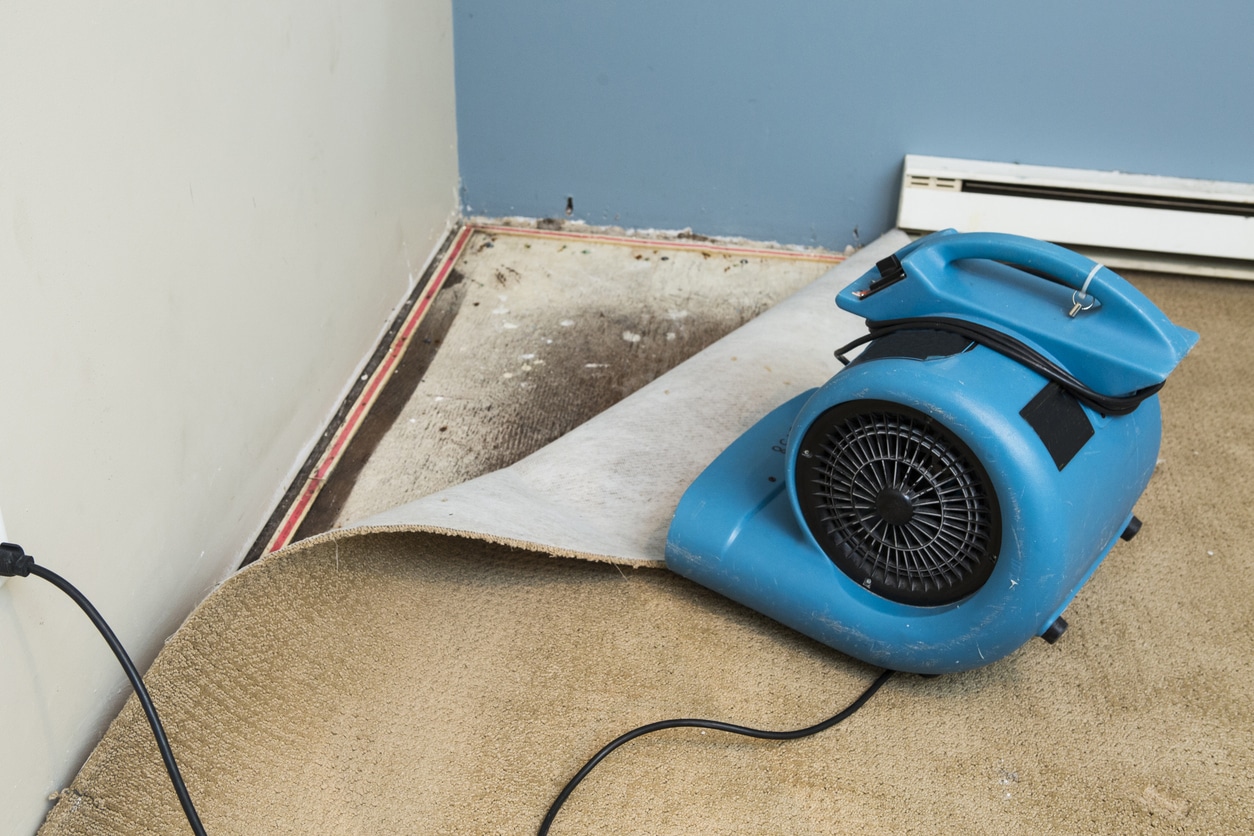
- Placing air movers to improve airflow across wet surfaces
- Using dehumidifiers to pull excess moisture from the air
- Reducing moisture levels in affected materials
- Helping bring the property back toward a drier, more stable condition
4. Cleaning and Sanitizing
After extraction and drying are underway, affected surfaces may need additional attention to improve the condition of the property. Depending on the source of the water, there may be contaminants, residue, or musty odors that should be addressed as part of the overall recovery process.
This stage may include:
- Cleaning hard surfaces
- Disinfecting impacted areas
- Addressing residue left behind by the water intrusion
- Treating musty or unpleasant odors
- Applying antimicrobial treatments when appropriate
5. Monitoring & Final Inspection
Water removal is not complete just because the visible standing water is gone or the floor appears dry. Moisture levels need to be checked throughout the drying process so we can track progress and confirm when the affected area has reached acceptable dry standards.
During this phase, we focus on:
- Monitoring moisture levels over time
- Checking whether drying equipment is still needed
- Confirming that materials are drying as expected
- Identifying any areas that may still be holding hidden moisture
- Completing a final inspection of the affected space
Frequently Asked Questions
How quickly should water extraction begin after a pipe burst or appliance leak?
Water extraction should begin as soon as possible. The longer water sits, the more time it has to soak into flooring, drywall, cabinets, insulation, trim, and structural materials. Fast response time reduces the overall scope of the damage and improves the chances of saving some materials that might otherwise deteriorate further.
Can hardwood floors in Hickory homes be dried and saved after water intrusion, or do they usually need replacement?
That depends on how much water reached the floor, how long it sat there, what type of hardwood is involved, and whether the subfloor beneath it is also wet. In some situations, hardwood floors can be dried and stabilized before the damage becomes too severe. In others, the boards may cup, buckle, stain, or separate enough that replacement becomes the more realistic option.
Schedule Your Water Removal Assessment Now!
Never delay when it comes to water intrusion. Once water enters a property, it can keep moving into more materials and create bigger problems the longer it sits. United Water Restoration Group of Hickory provides expert assessments, fast response, and customized plans for water removal and extraction in Hickory, NC.